
If you’ve ever considered a compact alternative to a full-size electric bike, then the term best foldable eBike is likely on your radar. We’ll explore what makes a foldable electric bike genuinely advantageous, especially in real-world urban and mixed-mode commuting contexts.
What Is a Foldable Electric Bike?
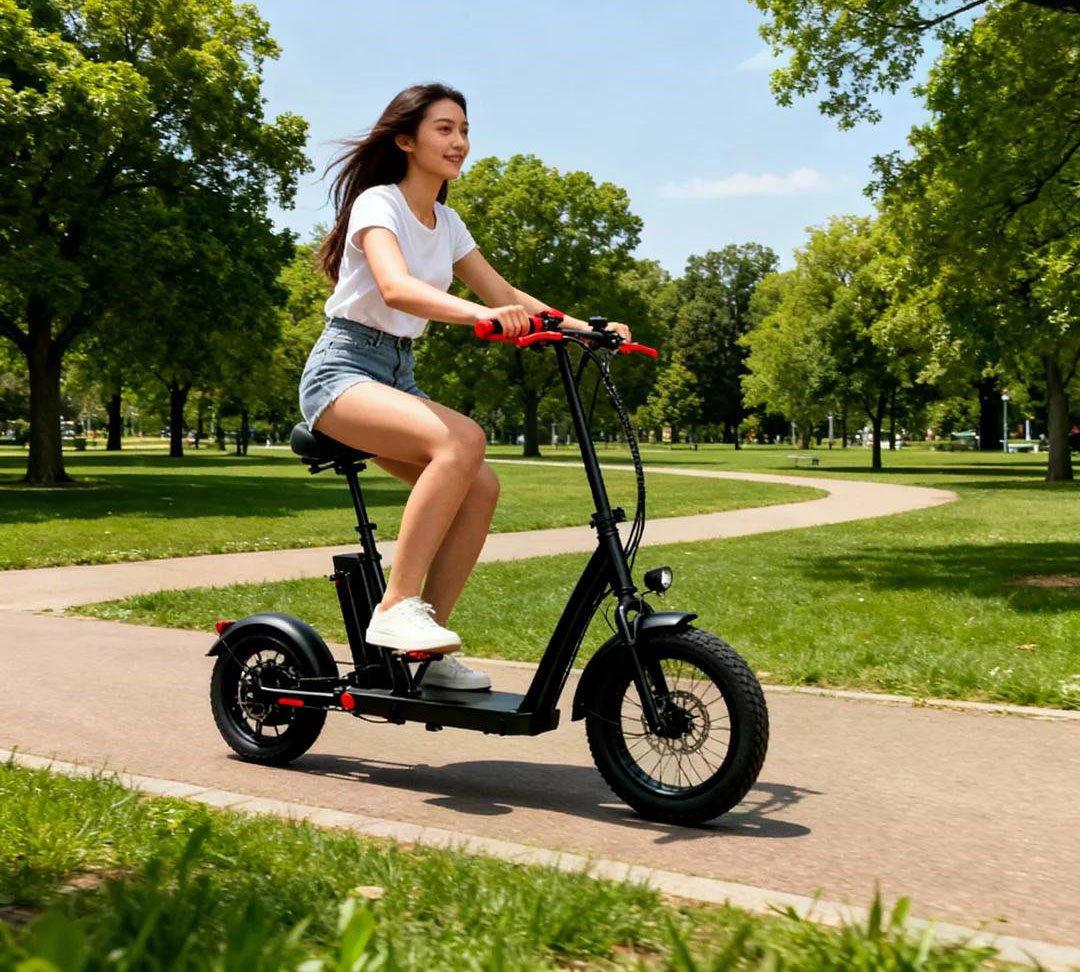
A foldable electric bike is a bike equipped with an electric motor and battery, whose frame and/or components fold so that the bike becomes much more compact for storage or transport. In effect, it merges the electric-assist capability of an eBike with the portability of a folding bicycle.
This means it can more easily fit under a desk, in a closet, in the trunk of a car, or on public transit. One definition notes that folding e-bikes “combine the advantages of e-bikes … with foldable frames for easy storage and travel.”
Why this matters
For urban commuters, apartment dwellers, travellers and anyone short on storage space, the idea of foldable + electric is compelling: you get the electric-assist convenience without the bulk of a full size eBike, and yet you avoid many of the compromises of ultra-small non-electric folders. For these users the phrase best foldable eBike encapsulates not only “folds well” but “rides well too”.
Key Features that Define a Great Foldable eBike
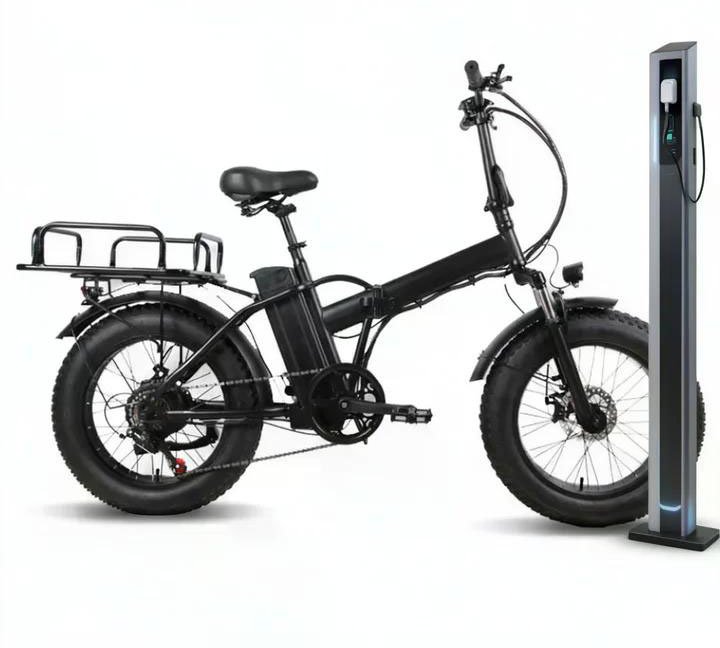
When you’re looking for the best foldable eBike, you should look beyond the single word “foldable” and examine the following features, because they collectively determine real-world usability.
1. Folding Mechanism & Compactness
How quick, safe and compact the folding is matters. A slow or awkward fold can reduce the practical benefit of portability. According to reviews, the best folding e-bikes feature quick, finger-safe folds and frames that lock when folded.
Also, compactness when folded — to fit under seats, in car trunks or on trains — is key.
2. Weight & Carry Ability
Even an eBike that folds needs to be moved, carried, or stowed. Because batteries and motors add weight, foldable e-bikes may still be heavier than non-electric folders.
If you have stairs, or you’ll carry it onto public transport, weight becomes a real factor.
3. Ride Quality & Electric Performance
“Foldable” should not mean “compromised ride”. The best foldable eBike will still offer stable geometry, reliable motor support, decent range and ride comfort. Reviewers note that many modern models offer similar power and usability to non-folding e-bikes.
You’ll want to check the motor type (hub vs mid-drive), battery capacity, assist levels and how the bike handles when unfolded.
4. Storage & Portability Use Cases
One of the top benefits: you can store it in tighter spaces or mix your commute (e.g., fold onto a train, bus, car trunk).
This versatility is often the main reason commuters choose them.
5. Security & Practical Daily Use
Because a foldable e-bike can be brought inside, stored under work-desk or in an elevator lobby, the risk of theft is lower compared to leaving a full-size eBike outside.
Also, practical accessories (rack, fenders, lights) matter for real-world commuting.
Advantages of the Best Foldable eBike for Users
When you pick a model that hits the marks above, your user experience improves across a number of dimensions.
Urban & Mixed-Mode Commuting
If your daily route includes train, bus, car+bike or you live in an apartment with limited storage, a foldable e-bike allows you to seamlessly fold the bike, carry or stow it, and continue your journey. For example, one guide states that a folding e-bike is the “space-saving, commute-boosting answer for city living.”
You avoid being locked into only cycling or only public transit—you get flexibility.
Space Savings & Home Storage
For users in apartments or with limited garage room: the ability to fold and store the bike indoors means you’re not forced to leave it outside, exposed. This tends to extend the life of the device (less weather damage) and reduces theft risk.
Easier Transport & Travel Use
Want to take the bike in your car’s trunk, in an RV, on a boat, or bring it on holiday? Many foldable e-bikes allow that. The collapsibility is a real practical benefit.
Environmental & Health Benefits
While any eBike offers environmental benefit by replacing car trips, a foldable variant increases the likelihood of daily use (because storage and transport are easier). One source emphasises that folding electric bikes are “portable, cost-effective, eco-friendly … and equipped with electric assistance to make cycling on steep hills … effortless.”
And of course, you still get pedal-assist benefits: less sweat, more manageable commutes, but still physical activity.
Areas to Watch: Trade-Offs of Foldable eBikes
No product is perfect. Even the best foldable eBike comes with trade-offs you should understand.
Reduced Stability or Ride Feel (compared to large-wheel bikes)
Because many folding e-bikes use smaller wheels (16″ or 20″) or shorter wheelbases to enable compact folding, the ride can feel different: slightly more agile but possibly less stable or smooth on rough surfaces.
If you primarily ride on rough rural roads, this may matter.
Weight & Complexity
While fold-able frames help with compactness, the addition of electric components increases overall mass. You may still end up lifting a 30-40+ lb bike up stairs or into transport.
Also, hinge joints and folding latches add components and possible maintenance points.
Cost Premium
Folding e-bikes often cost more than equivalent non-folding models because of the more complex frame and folding mechanism.
You’ll want to decide whether the specific foldable advantage justifies the extra cost for your use case.
Range & Performance Limits
Because of design constraints (smaller frames, potentially smaller batteries), you may see slightly lower range or performance compared to non-folding e-bikes with large batteries. One review notes that “you trade outright range and high-speed stability for portability, easy storage, and fewer theft worries.”
Thus, if you’re planning very long rides or heavy cargo, you’ll want to check specs carefully.
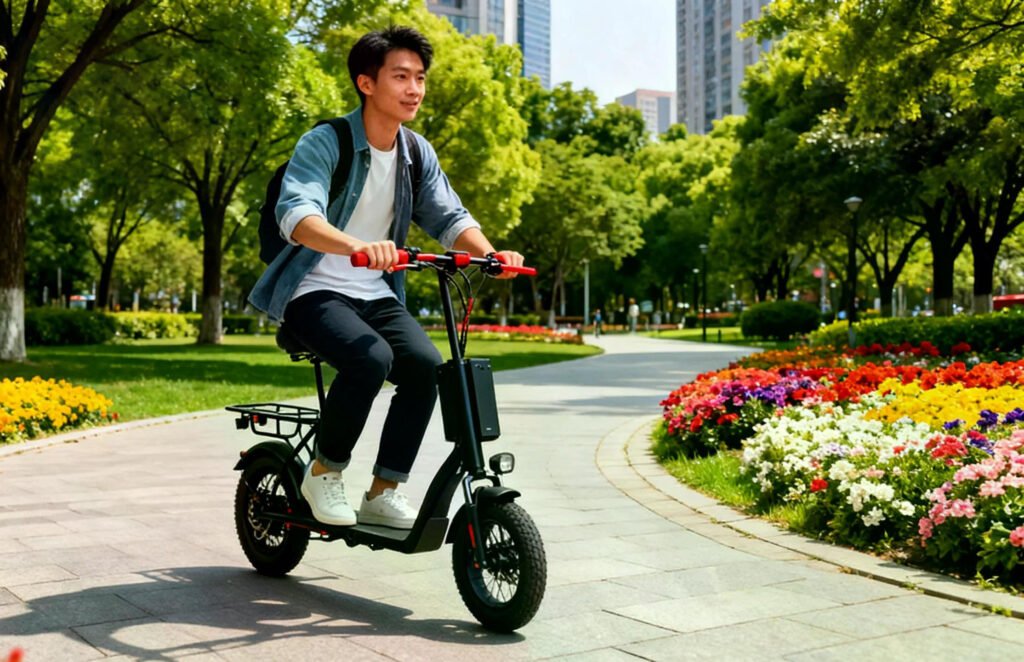
How to Choose the Best Foldable eBike for Your Needs
Given the benefits and trade-offs above, here is a structured approach to choosing a model that will work well for you.
Understand Your Use Case
- Will you use it primarily for commuting, errands, or leisure rides?
- Do you need to fold it for public transit, trunk transport, or home/office storage?
- What is your storage environment: a small apartment? stairs? Car trunk?
- What is your typical ride distance and terrain (flat vs hilly)?
As one user pointed out on Reddit:
“What models specifically are you interested in? What kind of riding will you be doing? What kind of space does it have to fit into?”
Clarifying this helps you prioritise features.
Evaluate Key Specifications
- Fold size & mechanism: How compact is it when folded? How many steps? How secure is the fold?
- Weight: Can you realistically carry it if needed?
- Motor & battery: What is assist level, battery capacity, expected range?
- Wheel size & geometry: Smaller wheels fold smaller, but ride feel may differ.
- Accessories: Does it come with racks, lights, fenders? Do you need to purchase them separately?
- Maintenance & support: Folding mechanisms can add complexity. Use reputable brand if possible.
Match To Your Storage & Transport Context
- If you’ll carry it on public transport or into an office, test the folding time and carry effort.
- If you’ll store it at home, measure your storage space and see if the folded size fits comfortably.
- If you’ll bring it in a car trunk, measure trunk dimensions and folded bike dimensions.
Budget and Value
- Because they add complexity, foldable e-bikes may cost more. Evaluate whether the compactness benefit is worth the premium for you.
- Consider long-term value: if easier storage means you ride more often, you may get greater total value.
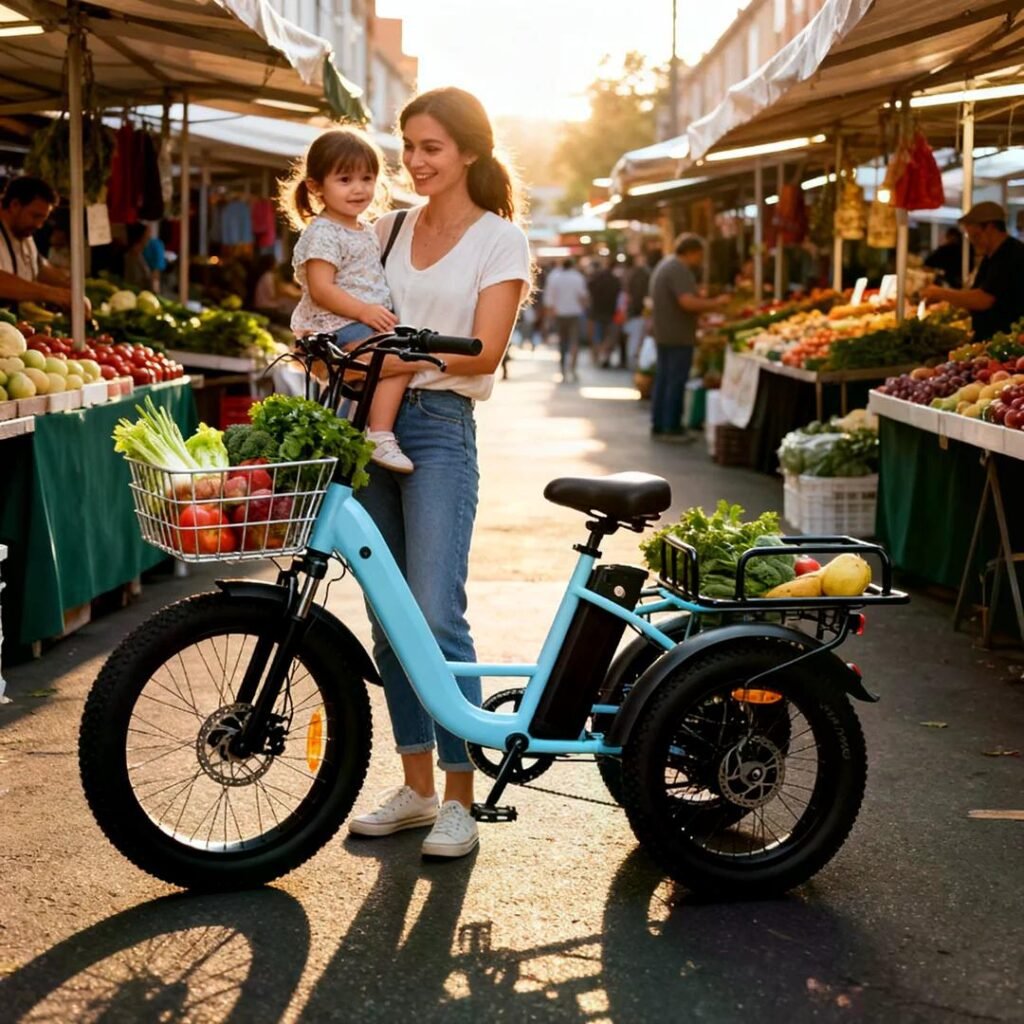
Application Scenarios: Real-World Use Cases
Here are some specific scenarios where investing in the best foldable eBike makes a tangible difference.
Apartment Dweller & Daily Commute
If you live in a city apartment with no garage and limited hallway storage, you might face leaving a full-size eBike outside or in your living room. A fold-able eBike allows you to bring the bike inside, under a desk, or even into the elevator. The portability reduces theft risk and makes daily use easier.
Multimodal Commute (Bike + Train/Bus)
You might ride the foldable eBike from home to the train station, fold it, carry it on the train, then unfold and ride to your office. That flexibility can significantly reduce commute time and avoid “last-mile” friction. Sources highlight that this mix of modes is a key advantage.
Car-Trunk / Travel Use
If you drive to a park or trailhead and then want to ride, a foldable eBike allows you to store it in your car trunk without a bike rack. Or if you’re on holiday in an RV or boat, it becomes a fully usable local ride. Reviews show that the space-saving nature is a big part of the attraction.
Environmental & Everyday Errands
Since you run a site focused on electric bikes, emphasising the best foldable eBike as a category has strong SEO, user-value and commercial merits.
Summary
Choosing the best foldable eBike comes down to matching portability and performance to your real-world context. When done well, a foldable eBike delivers flexibility, ease of use, storage advantages and electric assist performance that makes commuting, errands and everyday rides smoother.
Of course, there are trade-offs: weight, cost, slightly different ride dynamics, and range limits must be considered. But for many urban, apartment-based, or mixed-mode commuters the advantages will outweigh the drawbacks.
If your storage space is limited, your commute involves public transit or you simply want to bring your ride indoors each night, a foldable eBike is a strong candidate. Because you’ll use it more often when it fits seamlessly into your life, the bike becomes more than just a gadget — it becomes a tool for daily mobility, health and sustainability.
When you are ready to evaluate specific models, align the folding quality, weight, ride feel, battery/motor specs and storage/transport context to your priorities. That will ensure your chosen model truly lives up to the “best” label.
FAQ
Q 1: Are foldable eBikes slower or less powerful than non-folding models?
Not necessarily. A well-designed foldable eBike can provide similar assist, range and ride experience as a standard model, though you might see slightly smaller batteries or slightly higher cost for equivalent specs.
Q 2: How much should I expect the weight to be for a good foldable eBike?
Weights vary, but electric folding bikes still incorporate motors and batteries, so many are heavier than non-electric folders. Some trade-offs are required. Be sure you can lift or carry it if needed (e.g., up stairs or onto transit).
Q 3: What wheel size is typical and how does it affect ride?
Many foldable eBikes use 16″ or 20″ wheels to reduce the folded footprint. Smaller wheels fold more compact, but may feel different riding over rough surfaces. Some models use full-size wheels but then may not fold as compactly.
Q 4: Is foldability more relevant in urban settings?
Yes. The advantages are strongest when storage space is tight, public transit or mixed commuting is used, or you frequently transport the bike in a vehicle. For rural or long-distance only use, non-folding eBikes might suffice.
Q 5: What maintenance should I consider with a folding eBike?
Because of the folding hinges and mechanisms, you’ll want to check and maintain hinge bolts/latches, ensure the frame remains secure when unfolded, and ensure battery/motor components are still easily serviceable. Folding bikes may have more complexity than non-folding ones.