
The rise of electric bicycles has transformed urban and recreational mobility, but it has simultaneously introduced questions regarding their legal operation. One of the most frequently asked questions by new and prospective riders is: Can I ride an ebike on the sidewalk? The short answer is almost always no, but the complete, practical answer involves understanding the specific e-bike class, local municipal and state laws, and the type of cycling environment. Regulations are primarily designed to prioritize pedestrian safety, and motorized vehicles—even low-speed electric bicycles—are generally prohibited from pedestrian walkways. A deep dive into the rules concerning different e-bike categories, from cargo e-bikes to mountain e-bikes, is necessary to ensure legal and safe riding.

Understanding Ebike Classifications and Legal Status
Before addressing the sidewalk issue directly, it is crucial to recognize how electric bicycles are legally defined. In the United States, a three-tiered classification system is widely adopted by states and municipalities, distinguishing e-bikes based on speed and motor assistance. This framework is often the primary factor dictating where an e-bike can and cannot be operated.
Class 1: Pedal-Assist Only
Class 1 e-bikes are equipped with a motor that provides assistance only when the rider is pedaling, and the assistance ceases once the speed reaches 20 mph. These bikes are often treated similarly to traditional bicycles, meaning they are typically allowed wherever conventional bikes are permitted.
Class 2: Throttle and Pedal-Assist
Class 2 e-bikes are equipped with a throttle that can power the bicycle without pedaling, but the motor stops assisting at 20 mph. Because they can be propelled without human effort, they face more scrutiny in specific areas, though they are often allowed on bike lanes and multi-use paths.
Class 3: High-Speed Pedal-Assist
Class 3 e-bikes provide assistance only when the rider is pedaling, but they stop assisting at a higher speed of 28 mph. Due to their increased velocity, their use is often restricted to roads and dedicated bike lanes, and they are usually subjected to stricter age and helmet requirements.
The Core Rule: Why Sidewalk Riding is Discouraged
Fundamentally, sidewalks are designated spaces for pedestrians. The interaction between a cyclist, especially one traveling at speeds up to 20 mph on a Class 1 or Class 2 city e-bike or folding e-bike, and a pedestrian poses a significant safety hazard. A pedestrian’s lack of awareness of a fast-approaching vehicle, combined with limited sightlines from buildings or hedges, creates high-risk collision zones.
When considering a sidewalk, one must remember that e-bikes introduce momentum and mass beyond that of a traditional bicycle.
- Pedestrian Vulnerability: Pedestrians, particularly children, the elderly, or those with disabilities, are highly vulnerable. The sudden appearance of an e-bike, sometimes weighing over 60 pounds, can lead to serious injuries.
- Local Ordinances: Most major cities and towns have specific ordinances that explicitly ban the use of any motor-driven cycle, including e-bikes, on sidewalks. These local rules often supersede broader state-level regulations. Riders should consult their local Department of Transportation for the most current information. Failure to comply can result in fines and the confiscation of the device.

Ebike Application and Sidewalk Riding Exceptions
While the general rule prohibits sidewalk riding, the application of this rule can sometimes be influenced by the type of e-bike and its intended use. However, these are rare exceptions or situations where caution is paramount, not an endorsement of general sidewalk use.
Cargo E-bikes and City E-bikes
Cargo e-bikes and standard city e-bikes are typically used in dense urban environments. Their design often features increased weight and size to handle loads (in the case of cargo models) or better maneuverability.
- Necessity in Urban Gaps: In extremely narrow downtown areas where no bike lane exists and the road traffic is high-speed and congested, some riders might briefly use a sidewalk segment for a very short distance. This practice is inherently illegal and unsafe, but it is sometimes done out of a perceived necessity. Riding must be done at walking speed (3-5 mph), and the rider should yield to all pedestrians.
- Mounting/Dismounting: The only truly permissible sidewalk use is often the walking of the e-bike from a street crossing to a parking rack or a business entrance. The e-bike is not being ridden but pushed, treating the device as a piece of equipment, not a vehicle.
Mountain E-bikes and Trail Riding
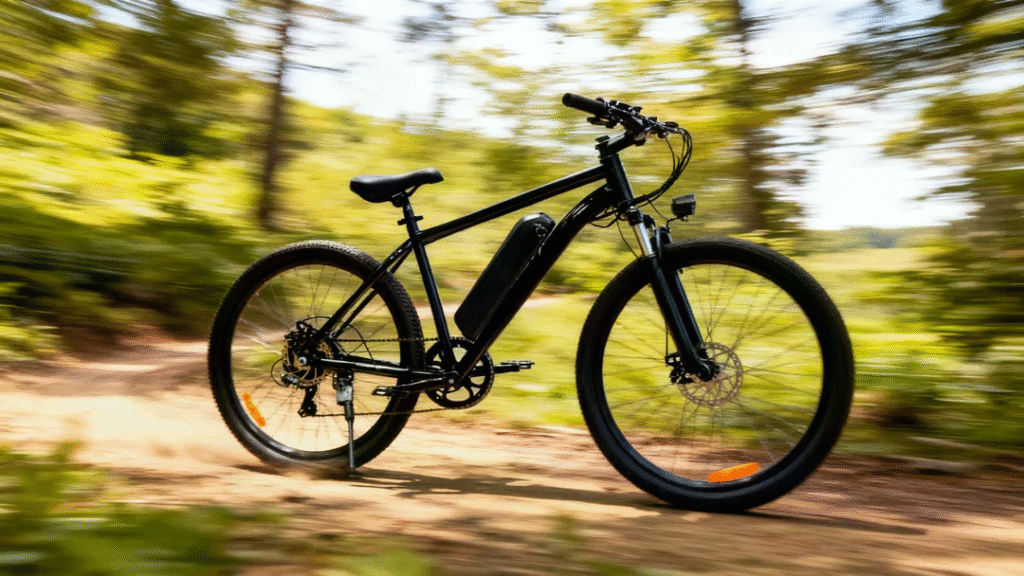
Regulations surrounding mountain e-bikes (e-MTBs) are focused primarily on trail access, not sidewalk use. E-MTBs are designed for off-road trails.
- No Sidewalk Justification: A mountain e-bike has absolutely no justifiable reason to be ridden on a city sidewalk. The speeds they can achieve and their aggressive tire patterns make them incompatible with pedestrian walkways.
- Trail Rules: For e-MTBs, the critical question is whether they are permitted on natural-surface trails. Generally, Class 1 e-MTBs are gaining access to non-motorized trails, but Classes 2 and 3 are typically restricted to motorized vehicle trails.
Scooters and Motorbikes (Separate Categories)
While often confused with e-bikes, devices like electric scooters (seated or stand-up) and low-speed electric motorbikes are treated differently.
- Scooters: Low-speed, seated electric scooters are often classified as mopeds or motor-driven cycles, requiring licensing and registration, and are strictly prohibited from sidewalks. Shared-use rental scooters, despite their low speed, are also largely banned from sidewalks due to city regulations.
- Motorbikes: These vehicles fall under motor vehicle laws, not e-bike laws. They are unequivocally prohibited from sidewalks and are treated identically to gasoline-powered motorcycles.
Folding E-bikes
A folding e-bike adheres to the same classification rules (Class 1, 2, or 3) as its full-sized counterparts. The fact that it can be folded for storage does not grant it any special exemption for sidewalk riding. Its operation must comply with the speed and assist restrictions relevant to its class.
Best Practices and Safety for E-bike Riders
Safe and responsible operation of any e-bike necessitates an understanding of road etiquette and a commitment to shared space. E-bike riders are strongly advised to adhere to the following principles:
Prioritize Infrastructure
Riders should always seek out and utilize designated cycling infrastructure. A bike lane, a protected path, or a multi-use trail is the appropriate place for an e-bike. If a bike lane is unavailable, the e-bike should be ridden on the street, following the rules of the road like any other vehicle. Using the street maintains the separation of vehicles from pedestrians, ensuring a safer environment for everyone.
Yield and Slow Down
When an e-bike must briefly interact with a pedestrian area (such as navigating a complex intersection or approaching a dismount zone), the rider should slow down to a pedestrian pace. The power of the e-bike’s motor should be respected; it is a vehicle capable of high speeds, and this capability requires caution. Pedestrians always have the right of way on sidewalks and crosswalks.
Check Local Laws
Given the rapid evolution of e-bike legislation, what was legal last year may have changed. New ordinances are regularly introduced in response to growing ridership. Therefore, it is essential for every e-bike owner to periodically check the specific rules of their operating municipality, especially if the e-bike is a faster Class 3 model. Operating an e-bike legally contributes to the community’s acceptance of this form of transportation, benefiting all riders.
Conclusion: Safety Over Convenience
The definitive answer to Can I ride an ebike on the sidewalk? remains a firm no in the vast majority of jurisdictions. This prohibition is rooted in the fundamental goal of protecting pedestrians. Regardless of whether a rider is on a large cargo e-bike or a compact folding e-bike, the motor and the potential speed introduce an unacceptable risk to those on foot. E-bikes are vehicles, and as such, they belong on the road or in dedicated bike infrastructure. Responsible e-biking requires prioritizing safety and legality over convenience, which ultimately ensures the long-term viability and positive public perception of this important mode of transport.