
The electric bicycle (ebike) has fundamentally changed how we approach short-to-medium distance travel and recreational riding. No longer are cyclists restricted by physical fatigue or the need for a recharge within a small radius. The modern focus, particularly for commuters and adventurers, is squarely on ebike long range. This pivotal feature transforms an ebike from a mere assisted bicycle into a genuine, viable alternative to a car for daily tasks and a powerful tool for extended exploration. Understanding the true range of an ebike, however, involves more than just reading the manufacturer’s stated battery capacity. It’s a complex interplay of technology, physics, and riding style. Our aim here is to unpack this complexity, providing you, the ebike user, with the practical knowledge to not only understand but also maximize your miles per charge.
The Science Behind Long Range: Key Technological Pillars
When evaluating an ebike long range capability, several core components and design elements must be considered. It is a harmonious system where the efficiency of one part significantly impacts the performance of the whole.
The Powerhouse: Battery Capacity and Chemistry
The single most crucial determinant of an ebike’s range is its battery. Capacity is primarily measured in Watt-hours (Wh), which is the product of voltage (V) and amp-hours (Ah). For instance, a 48V battery with 17.5Ah has a capacity of 840Wh.
Crucially, the chemical composition of the battery matters. The vast majority of quality ebikes, including those at Dcpowerebikes, utilize Lithium-ion (Li-ion) batteries. These are favored due to their high energy density—meaning more power can be stored in a lighter, smaller pack—and their impressive lifecycle. A battery with a higher Wh rating will, all else being equal, provide a longer range.
The Engine: Motor Efficiency and Placement
The motor’s role is not just about power (torque) but also efficiency. How effectively the motor converts electrical energy from the battery into mechanical motion directly impacts range.
- Mid-Drive Motors: These are mounted near the pedals, utilizing the bike’s gears. As a result, they can operate at their most efficient RPM (revolutions per minute) across various terrains, which often translates to superior energy efficiency and, consequently, longer range.
- Hub Motors: These are placed in the front or rear wheel hub. While simpler and often more affordable, they are generally less energy-efficient than mid-drives, especially on steep inclines, as they cannot benefit from the bike’s gearing system.

The Silent Factor: Ebike System Voltage
Voltage (e.g., 36V, 48V, 52V) impacts both power and efficiency. Higher voltage systems are generally better at delivering power with less heat generation. Less heat means less wasted energy, which ultimately contributes to a better overall range and a smoother, more responsive riding experience.
Unpacking the Real-World Range: Variables Beyond Technology
Manufacturers often cite a maximum range under “ideal conditions”—flat ground, no wind, minimal speed, and a lightweight rider using the lowest level of pedal assist (PAS 1). However, real-world range can differ significantly. Therefore, a deep understanding of external variables is paramount for the informed user.
The Rider and the Payload
Rider weight and cargo load are significant energy drains. The heavier the total load (rider + bike + cargo), the more power the motor must expend, particularly during acceleration and hill climbing. Consequently, a heavier rider will typically achieve fewer miles than a lighter one on the same bike.
Terrain, Incline, and Wind
Hill climbing is the biggest consumer of battery life. A steep grade forces the motor to draw maximum current, depleting the battery much faster than riding on a flat surface. Similarly, riding into a strong headwind exponentially increases drag, requiring the motor to constantly work harder. Riding on smooth pavement is always more efficient than tackling sand, gravel, or soft trails, where rolling resistance is dramatically higher.

Pedal Assist Level (PAS) and Throttle Use
This is perhaps the most controllable variable for the user.
- Low PAS levels (1-3): The rider provides most of the effort, and the battery is used sparingly. This is the primary strategy for maximizing long range.
- High PAS levels (4-5) or extensive Throttle Use: These modes deliver maximum motor power, drastically reducing the range. A user relying on the throttle for their entire commute might see their range cut in half compared to a user who pedal-assists minimally.
Actionable Strategies for Maximizing Ebike Long Range
Understanding the technology and variables allows the user to implement strategies that actively extend their riding distance.
A. Strategic Gear Shifting and Pedaling
If your ebike has gears (which most quality long-range models do), use them proactively. Just like a traditional bicycle, shifting to a lower gear before a hill allows the motor (and your legs) to operate more efficiently. It prevents the motor from bogging down and drawing an excessive, high-amperage load from the battery. A smooth, consistent cadence (pedaling rhythm) is key to efficiency.
B. Tire Pressure and Maintenance
Tire pressure is a simple but often overlooked factor. Riding with underinflated tires significantly increases rolling resistance, wasting valuable battery power. Consult your tire sidewall for the recommended pressure and check it regularly. Furthermore, a well-maintained drivetrain—clean chain, lubricated gears—ensures minimal mechanical friction, allowing the electrical energy to be optimally converted into forward momentum.
C. Optimized Charging and Storage
Battery health directly translates to long-term range. Most modern Li-ion batteries prefer to be stored and charged between 20% and 80% capacity for maximum lifespan, although charging to 100% is fine before a long ride. Additionally, exposing the battery to extreme temperatures, both hot and cold, will temporarily or permanently degrade its performance and reduce its effective range.
The Application of Long Range Ebikes: Beyond the Commute
The true value of an ebike long range model is its ability to seamlessly integrate into various aspects of life, offering utility and freedom unmatched by standard bikes.
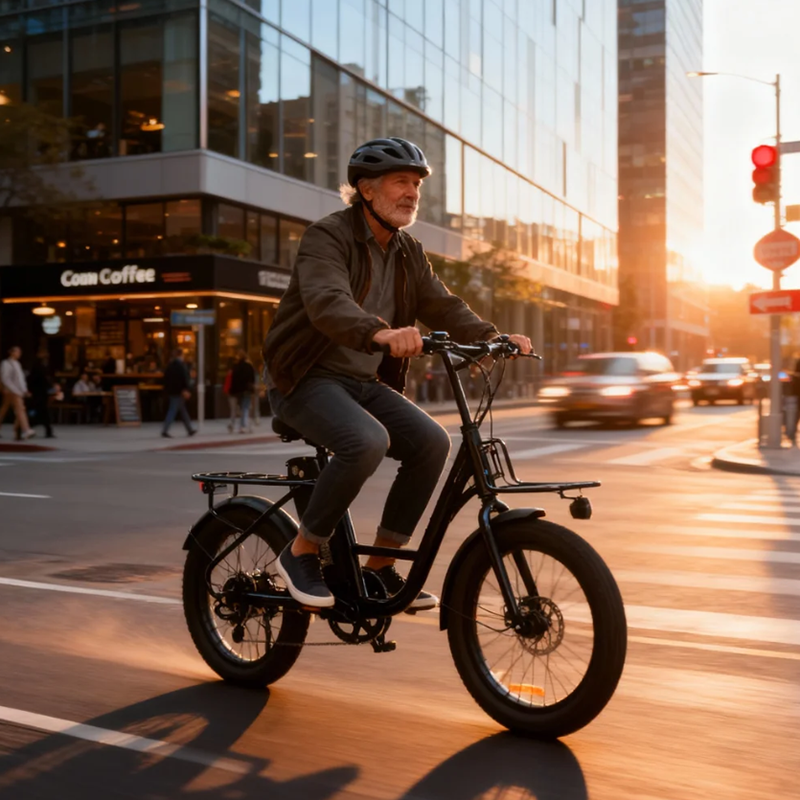
- Extended Commuting: A long-range ebike eliminates “range anxiety” for the average commuter, making 20-30 mile round trips entirely feasible without a midday charge. This facilitates car replacement, especially in urban and suburban environments.
- Adventure and Touring: For recreational riders, long range means multi-day trips are now possible, opening up vast trails and scenic routes where charging points might be scarce. Bikepacking and touring become accessible to a wider demographic.
- Cargo and Utility: When carrying significant loads (e.g., groceries, children, delivery items), a high-capacity battery is essential to overcome the extra weight and maintain a respectable speed over distance.
In conclusion, achieving maximum ebike range is a shared responsibility between the superior engineering of the bicycle (high Wh battery, efficient motor) and the intelligent riding decisions of the user (optimized PAS, smart gearing, and proper maintenance). By respecting the interplay of these factors, the user can truly unlock the full potential of their long-range ebike, transforming transportation and adventure alike.