
Welcome to the world of electric cycling, where the choice of motor significantly shapes your ride. For many users, the ebike hub motor is the most familiar and accessible technology. It’s a self-contained unit positioned right in the center, or ‘hub,’ of either the front or rear wheel, directly converting electrical energy into rotational motion. This guide is crafted to provide a comprehensive and practical understanding for ebike users, helping you determine if a hub motor aligns with your personal riding goals and lifestyle.
The simplicity and robust nature of the hub motor have made it a cornerstone of the ebike market, powering countless commuting, leisure, and utility bikes globally. Understanding its mechanics, advantages, and limitations is the key to maximizing your enjoyment and making the most of your ebike.
What Exactly is an Ebike Hub Motor and How Does It Function?
The core principle behind an ebike hub motor is elegant and straightforward: electromagnetism. A hub motor contains two main parts—a stator and a rotor. The stator is the stationary part, typically fixed to the axle, containing copper windings. The rotor, which is the motor casing and is attached to the wheel spokes, spins around the stator.
When electric current flows from the battery, it is controlled by the motor controller and routed through the stator’s windings, creating an electromagnetic field. This field pushes against the magnets embedded in the rotor casing, causing the casing—and thus the wheel—to spin. This direct power delivery means the motor operates completely independently of the bike’s chain, gears, and pedals, providing immediate and consistent thrust directly to the road surface.
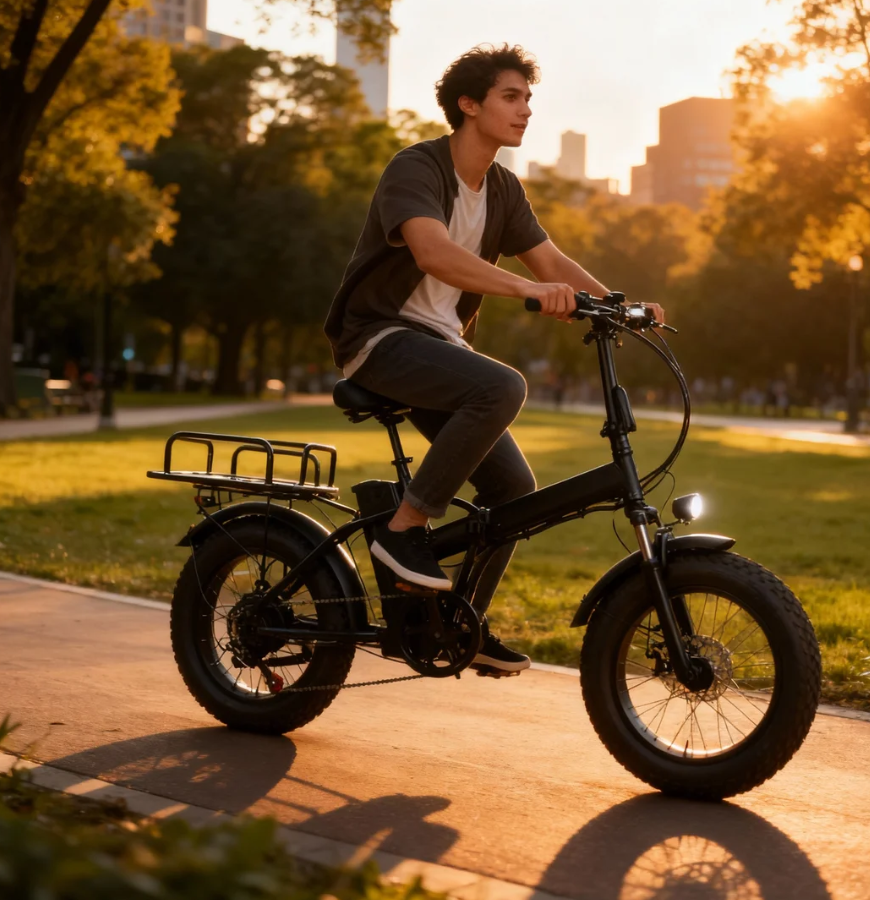
Hub motors come in two primary types, each serving different user needs:
- Geared Hub Motors: These utilize a planetary gear reduction system. The internal motor spins quickly, and the gears slow it down while increasing the torque applied to the wheel. They are typically lighter and smaller, offering better hill-climbing ability and making for easier pedaling when the power is off.
- Direct-Drive Hub Motors: In this design, the motor’s axle is the wheel’s axle, and the rotor casing is the motor itself, spinning around the fixed stator without internal gears. They are simpler, often quieter, and can be used for regenerative braking, although they are generally heavier and offer less low-speed torque than geared hubs.
The Practical Advantages: Why Hub Motors Excel for Ebike Riders
Hub motors offer a distinct set of benefits that appeal to a vast majority of ebike users, particularly those focused on commuting, casual riding, and practical utility.
1. Unmatched Affordability and Simplicity
Hub motor systems are generally less complex to manufacture and install onto standard bike frames. Consequently, ebikes equipped with them often come with a more accessible price point, making electric cycling attainable for a wider audience. Furthermore, the motor is a completely sealed unit, reducing the cost of ownership. The system operates distinctly from the standard bicycle drivetrain (chain, cassette, derailleur), meaning there is significantly reduced wear and tear on these components.
2. Robust Reliability and Low Maintenance
Because the motor is sealed and self-contained within the wheel hub, it has very few exposed moving parts. Dirt, debris, and the elements are largely kept out, resulting in a system that demands minimal routine maintenance. For the everyday rider who simply wants to charge the battery and ride, this hands-off reliability is a huge plus. Any needed service is usually isolated to the wheel assembly itself.
3. Throttle-Friendly Independent Propulsion
A key advantage for many users is the hub motor’s ability to drive the wheel directly, independent of pedaling. This is why hub motor ebikes are ideally suited for throttle operation. Whether you’re looking to start quickly at an intersection, need a boost without cranking the pedals, or simply wish to cruise momentarily, the on-demand power from a throttle is readily available. This feature provides a smooth, often motorcycle-like riding experience.
4. Versatile Integration and Retrofitting
Hub motors can be paired with almost any traditional bicycle setup, including various gearing systems like external derailleurs or internal gear hubs. This versatility allows manufacturers, and even users wishing to convert a standard bicycle, much flexibility in design and application. Front hub motors in particular are often utilized for quick and easy conversion kits.
Understanding the Trade-Offs: Considerations for Hub Motor Users
While hub motors are fantastic for many applications, it’s important to understand where their design might present limitations, especially when compared to alternative systems like mid-drive motors.
1. Impact on Weight Distribution and Handling
The weight of the motor (which can range from 7 to 11 pounds) is concentrated at the very front or back of the bike. A rear hub motor, which is the most common, shifts the center of gravity rearward. This change can be noticeable, making the bike feel slightly rear-heavy, especially when lifting the bike or navigating fast, tight turns. The increased mass in the wheel, also known as unsprung weight, can also make the ride a little less nimble or responsive on rough or extremely technical terrain.
2. Limited Hill-Climbing Performance (Compared to Mid-Drive)
A hub motor does not benefit from the mechanical advantage provided by the bike’s gears. It must operate within its own power band, directly driving the wheel. Although modern, high-torque geared hub motors are powerful, they cannot match the efficiency and climbing ability of a mid-drive motor that leverages the entire gear range of the bicycle drivetrain. For riders in extremely steep, mountainous areas, or those frequently carrying very heavy loads, this can be a limitation.
3. Complexity of Flat Tire Repair
Changing a flat tire on a wheel with a hub motor is generally more involved than on a traditional bike. The motor’s axle is held in the frame with robust nuts, and the necessary electrical cables must be carefully disconnected and reconnected to remove and reinstall the wheel. While certainly manageable, it requires a little more time and attention than a standard quick-release wheel.

Aligning the Motor to Your Application: Making the Right Choice
Ultimately, the best motor choice is the one that fits your specific needs and riding ethos. For most ebike users, a hub motor represents an excellent, practical, and dependable power solution.
| Primary Use Case | Recommended Hub Motor Placement | Key Takeaway for the Rider |
| Urban Commuting & Casual Rides | Rear Hub (often geared) | Excellent power, low maintenance, and smooth acceleration perfect for city travel. |
| Utility & Cargo Use | Rear Hub (high torque) | Direct power is great for consistent hauling, but be mindful of total climbing ability with heavy loads. |
| Flat Terrain & Cruising | Direct-Drive or Geared Hub | Reliable, quiet, and provides the best value for long, relatively flat distances. |
| Hilly Terrain (Moderate) | Geared Rear Hub | The torque multiplication from the gears offers the best balance of climbing power and cost-effectiveness. |
The widespread adoption of hub motors highlights a powerful truth: they are an incredibly effective, affordable, and durable technology that has brought the joy and utility of electric cycling to millions. When selecting your ebike, reflect on your typical route and personal priorities; if value, simplicity, and low upkeep are high on your list, a hub motor ebike from DC Power Ebikes is likely your ideal match.